The agentic payment model for conditional settlement.Computable risk, minimal cost.

Atara is a conditional payment protocol. It computes the risk on every payment, decides on evidence whether it settled, and takes a fraction up front instead of the whole sum.

Order $2,000,000.00
  • Wallet provenance
  • Settlement history
  • Dispute outcomes
  • Verification checks
Atara Others
AI-computed
risk of default
··· None
Fee on
this order
···
Advaita ecosystem

An AI-native conditional payment protocol.

Pricing needs somebody to decide the condition was met, and both of them need a record of what actually happened.

01

AI prices the risk on every trade

The model computes this counterparty’s probability of default on this trade and sets the collateral from it, instead of demanding the full amount up front whoever you are.

  • Post a fraction, pay the balance on delivery
  • The more you settle, the less you post
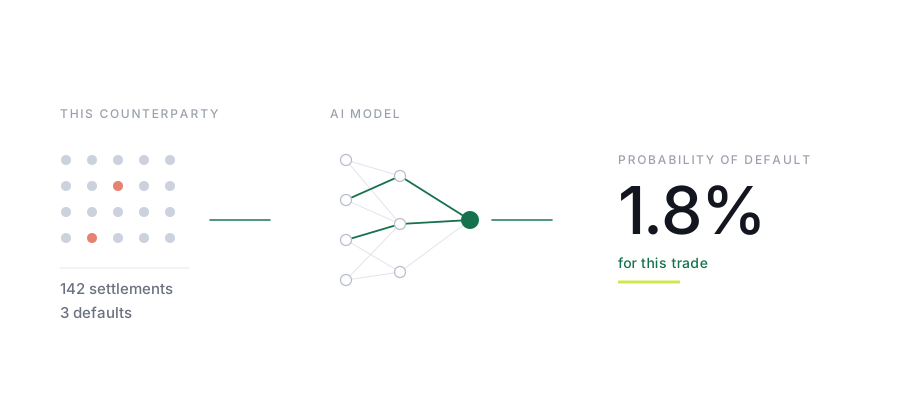
An AI model reads a counterparty's record through a weighted network and computes a probability of default for this trade
02

The condition is judged on evidence

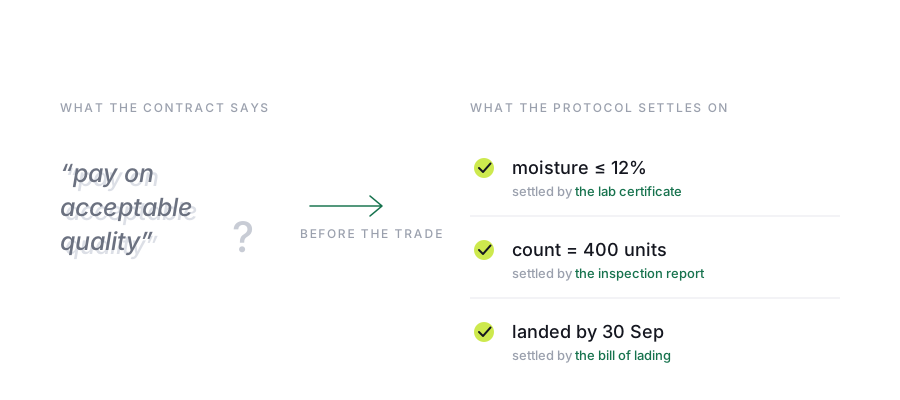
Whether the condition was met is decided on what the evidence says, under rules published before the trade.

  • No position, no profit in the outcome
  • Rules published up front
  • Release follows the evidence
A subjective clause is rewritten before the trade into objective tests, each bound to a named source of evidence
03

Real settlement data

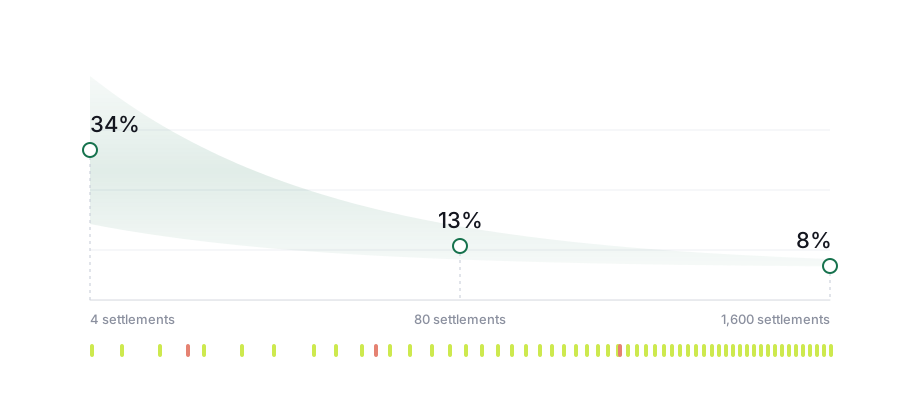
Every completed trade leaves one record with a real amount attached: who paid on time, who defaulted. It is the only data the pricing model trains on.

  • Sharper with every settlement
  • Clean records post less and less
  • Models can be copied, records cannot
As completed settlements accumulate, the model's estimate tightens

An AI model prices every payment.

01 It reads what this counterparty has actually done

Settlement history, dispute outcomes, verification checks, and where the funds came from.

02 It computes one probability of default

For this counterparty, on this trade. Not a tier set when the account opened.

03 Collateral, fee and recourse follow from that number

What you post, what you pay, and on what evidence it unwinds.

1.8% probability of default · illustrative
Settlement historyDelivered, late, or defaulted
Dispute outcomesWho was found at fault
Verification checksSix, on both sides
Wallet provenanceWhere the funds came from
Probability
of default
CollateralWhat fraction has to be posted
FeePriced to that probability
RecourseOn what evidence it unwinds
Priced per trade

A limit set when the account opens says nothing about who is on the other side of this one.

A price, not a gate

Other systems answer whether you may proceed. This answers what you post and what you pay.

The exit is written first

How a trade unwinds is fixed before either side commits, not negotiated after something breaks.

Most payment conditions cannot be judged today.

The Atara protocol makes the condition decidable.

01

Subjective conditions become verifiable tests before the trade

Two riders cross an empty road from above, each keeping to their own line

A clause like “pay on acceptable quality” is broken down, before the trade, into standards both sides accept, each bound to a named source of evidence: a document, a reading, or a test result. The ruling is about what the source says, not about what either side believes.

Today, each side reads “acceptable” its own way once money is at stake, and the reading comes off one party’s own instrument.

02

The judge has no stake in the outcome

Seen from above, two people cross a road on bold painted stripes

Whichever way a case is decided, the judge earns the same. Forfeited collateral never flows to the judge.

Today, a dispute goes to the custodian or the platform: the party that holds the money and takes a cut of the trade it is asked to rule on.

03

Release follows evidence, not the other side’s confirmation

A lone worker stands on a quay at dusk facing the hull of a loading vessel, recording what has arrived

Objective evidence such as a bank receipt triggers the release. A counterparty that owes performance cannot stall your money by withholding confirmation.

It completesValue to the payee
Evidence never arrivesReturned to the payer
Screening failsReturned before release

Today, you deliver, the other side declines to confirm, and the funds sit in escrow.

Send us a trade.

A size, a side, and a counterparty you do not trust yet.

Start